

BLACK INK
BREATH OF THE SPIRIT

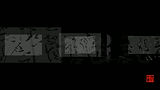
NEOILLUSIONIST HEART SUTRA
An Art Film by NIILARTEY DE OSU
Edited by Master REDSQUARE
Calligraphy by Master REDSQUARE
Form is emptiness, emptiness is form. And emptiness becomes form through the hand that holds the brush.
In this hour-long meditation, NiiLartey De Osu captures Master RedSquare not merely transcribing the Heart Sutra, but breathing spirit into being, stroke by stroke, through the ancient medium of black ink on white paper. But this is not documentation. This is transmutation.
The film opens into intimacy: the hand, the brush, the character emerging. We are brought so close that we no longer observe creation; we inhabit it. The camera refuses panorama, refuses distance. Instead, it dwells in the space where intention becomes mark, where consciousness touches matter.
What unfolds is not linear transcription but something closer to what Red Pine describes in his commentary on the Heart Sutra: the recognition that emptiness and form are not opposites but the same reality perceived from different angles. NiiLartey De Osu's film embodies this teaching through its very structure. Clips overlay and dissolve into one another - past strokes haunt present ones, future characters shimmer beneath current gestures. Time becomes porous. A single stroke exists in multiple moments simultaneously, creating what The Twelve Gates of Ink calls "the eternal now of the descending brush."
The Breath Made Visible
The editing itself breathes. Long, meditative passages where the brush loads with ink, where the hand hovers in preparation, where emptiness holds the possibility of all forms. Then movement, the stroke descending with the decisiveness of sudden enlightenment, that wu wei action that arises not from forcing but from perfect alignment with the moment.
Pauses return. The white space waits. The brush reloads. Breath in, breath out. Form emerging from emptiness, dissolving back into potential.
Yaätzin's original score does not attempt to sound "Asian," just as the Neoillusionist approach does not merely replicate tradition. The music mirrors the visual layering: avant-garde textures that fold into and through one another, creating unexpected harmonics, spaces of silence that become as significant as sound. The absence of brush-on-paper sounds is itself a teaching - we are not hearing the external act but sensing its internal resonance.
Palimpsest of Presence
As the film progresses, the layering intensifies. Characters appear over characters, strokes interpenetrate, the calligraphy becomes what Huayan philosophy calls shih shih wu ai, mutual interpenetration without obstruction. Each mark contains all marks. Each moment of creation holds all other moments.
This is not chaos but organic unfolding. The Heart Sutra's teaching that "there is no eye, ear, nose, tongue, body, mind" finds visual expression as boundaries dissolve; between one stroke and another, between past and present, between the artist's hand and the viewer's perception. Master RedSquare's editing moves through different sections of the text without hierarchy or emphasis. No phrase demands special reverence over another. The whole teaching unfolds as an indivisible whole, just as Red Pine reminds us that the sutra is not linear argument but simultaneous realization.
What The Twelve Gates of Ink Reveals Here
This film becomes a living embodiment of the Twelve Gates treatise's teachings:
"In the moment of contact between brush and paper, time dissolves. Past, present, and future converge in the eternal now of the descending stroke."
We witness the cosmological act of ink meeting paper, not mere representation but the primordial emergence of being from non-being, form from emptiness, meaning from void.
"The master painter learns to achieve what the Zhongyong calls the perfect mean, that dynamic balance point where the brush becomes a living extension of spiritual intention."
Through intimate focus on hand and brush, we see this balance embodied: not too much ink, not too little; not forced, not hesitant; fully committed yet completely surrendered.
"Empty space is not negative space but positive presence, the realm of infinite potential from which all forms emerge and to which they return."
The film's layering creates new white spaces even as it fills others. Emptiness and form dance in perpetual exchange, neither dominating, neither disappearing.
Beyond Documentation, Into Transmission
An hour is not an arbitrary duration. It is the time required to enter the work rather than merely watch it. The meditative pace dismantles our habitual relationship to time, to productivity, to completion. We cannot consume this film. We can only surrender to its rhythm, allow it to slow our breathing, quiet our grasping mind.
The overlapping layers create what Red Pine describes as "the teaching beyond teaching," meanings that arise not from words alone but from the spaces between them, from the relationships they form, from the viewer's own consciousness meeting the artist's. New characters seem to emerge that were never written. Phantom strokes appear where none exist. The palimpsest becomes a mirror reflecting our own mind's tendency to create, to project, to see patterns in emptiness.
This is the Neoillusionist vision - not abandoning tradition but allowing it to refract through contemporary consciousness, creating new dimensions while honoring ancient depths. The film treatment itself becomes a koan: Can you see the brush stroke that exists in three moments at once? Can you read the character that is both written and unwritten? Can you distinguish the artist's hand from your own perception?
The Sacred Object
That this film exists in only two editions, paired with the physical calligraphy created during its making, transforms it from artwork into transmission object. Like the ancient ink cakes that are too precious to grind, too saturated with time and devotion to use, these paired works hold decades of practice compressed into a single hour of expression.
To acquire such a work is not to purchase but to become a custodian of living practice, the guardian of a moment when form and emptiness recognized themselves as one, when the Heart Sutra was not recited but embodied, when brush and paper and hand and breath and consciousness dissolved their boundaries and became, for one seamless hour, simply this.
As the Heart Sutra teaches: "Gate gate pāragate pārasaṃgate bodhi svāhā," Gone, gone, gone beyond, gone altogether beyond, O what an awakening!
Through RedSquare's brush, through Yaätzin's sonic architecture, through the film's layered temporality, we are invited not to witness awakening but to recognize it was never absent. The brush descends. Ink meets paper. Form emerges from emptiness.
And in that emergence, nothing has changed and everything is revealed.
The film can only be experienced in its fullness: an hour of devoted attention, like meditation itself, cannot be abbreviated. What appears here are merely words pointing at the moon. The moon itself awaits in the descending brush, the layered moments, the breath between strokes.