

BLACK INK
BREATH OF THE SPIRIT

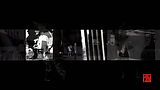
JACOB'S LADDER - LIFE IS CALLIGRAPHY
An Art Film by NIILARTEY DE OSU
Edited by: Master REDSQUARE
This art film is the fourth dimension of calligraphy — ink released into time. Rather than recording brush on paper, the camera witnesses life itself as the field of inscription: movement, breath, interruption, silence, and emergence become the strokes.
Black Ink is breath made visible, a communion of silence and form.
Each stroke is a meditation, each drop a mirror of the unseen.
Here, the brush does not depict life — it becomes life.
In this cinematic rendering, the world itself is the paper, and every human gesture, decision, tremor, ritual, and disappearance appears as ink unfolding across existence. The film does not illustrate calligraphy — it reveals that we are already inside the calligraphy of being.
The Ladder Between Worlds
Jacob's Ladder appears in the biblical account as a dream-vision: a structure connecting earth to heaven, with angels ascending and descending in perpetual movement. The mystics understood immediately what this image revealed — not a ladder to be climbed but the recognition that heaven and earth are not separate. The ladder IS reality itself, properly perceived.
Ibn Arabi called this space barzakh, the isthmus, the meeting place, the realm where opposites interpenetrate without collapsing into one another. The visible and invisible, the material and spiritual, form and meaning — these do not exist in different locations but occupy the same space, perceived differently depending on the clarity of the witnessing consciousness.
NiiLartey De Osu's Jacob's Ladder makes this metaphysical truth phenomenologically visible. The film captures what is always already occurring but remains invisible to ordinary perception: that every human movement through space leaves a trace in the fabric of reality, that we are constantly writing ourselves into existence with every gesture, every breath, every decision to move or remain still.
Life as Four-Dimensional Calligraphy
If traditional calligraphy inscribes meaning in two dimensions, the movement of brush across paper creating characters that carry consciousness across time, then life itself is calligraphy extended into four dimensions. We are the brushes. Space is the paper. Time is the ink. And what we inscribe is the unrepeatable signature of our presence.
Imagine: if every person left a visible trace of their movement through space and time, what patterns would emerge? The daily walk to work becomes a repeated stroke, deepening with each iteration. The spontaneous change of direction - a decision, an impulse, an encounter — appears as an unexpected flourish, a moment where the brush lifted and moved elsewhere. Gathering and dispersal, routine and rupture, all become visible as the choreography of existence.
Jacob's Ladder does not imagine this, it captures it. Through the editing process, Master RedSquare makes visible with layered footage, superimposition, and the measured rhythm of editing, what philosophers call our "being-in-the-world" - the fact that we do not simply exist in space but actively inscribe ourselves into it, co-create it, write it through our presence.
The film focuses on Chelsea, New York, a neighborhood where high culture meets commerce, where art galleries neighbor construction sites, where the accumulated history of urban transformation remains visible in the architecture itself. This location is not incidental. Chelsea becomes a palimpsest, a page written and erased and written again across decades, and the current inhabitants continue the inscription whether they know it or not.
The Five Stages: From Black to White, Form to Emptiness
NiiLartey De Osu grounds his cinematic vision in the classical Chinese understanding of ink's five stages, often called the "Five Colors of Ink." Though working in monochrome, the ink painter distinguishes between:
焦 (jiāo) — Scorched black: The darkest, driest ink, dense and opaque
濃 (nóng) — Thick black: Rich, saturated, the color of deep presence
重 (zhòng) — Heavy: Medium density, substantial but not total
淡 (dàn) — Light: Diluted, transparent, beginning to dissolve
清 (qīng) — Clear: Nearly white, the thinnest wash, approaching void
These are not merely technical gradations but philosophical states. The movement from black to white mirrors the movement from manifest form to pregnant emptiness, from material density to luminous transparency. In The Twelve Gates of Ink, this progression describes not only ink but consciousness itself: the realization that what appears most solid (black, form, matter) and what appears most empty (white, void, space) are not opposites but exist on a continuum, each containing the other.
Jacob's Ladder employs black and white cinematography not for aesthetic effect but as philosophical commitment. The black-and-white footage removes color's distraction, forcing attention to light and shadow, presence and absence, the way forms emerge from and dissolve back into the ground. Every figure moving through the frame participates in this play of appearance and disappearance, solidification and dissolution.
The layering technique, multiple exposures, superimposed images, temporal palimpsests, creates exactly what happens in ink wash painting. Forms become semi-transparent. The boundary between figure and ground softens.
What was distinct begins to bleed into what surrounds it. The individual human body, so apparently solid and separate, reveals itself as permeable, as continuous with its environment, as a temporary condensation of the same energy that animates everything.
The Angels Ascending and Descending
In the biblical vision, angels move both directions on the ladder — ascending toward heaven, descending toward earth. This bidirectional movement contains a crucial teaching: spiritual realization is not about escaping the world but about recognizing the divinity already present within it.
The ascending movement represents the soul's recognition of transcendence; the realization that we are not merely material beings but consciousness temporarily housed in matter. The descending movement represents incarnation; the recognition that the divine does not remain aloof in heaven but enters fully into form, into time, into the messy complexity of embodied existence.
Ibn Arabi insisted that the kamil (the perfected human) does not transcend the world but becomes fully present within it, seeing through appearances to the divine reality that manifests in every form. The enlightened one does not leave the marketplace but returns to it with transformed vision, recognizing that every encounter, every mundane transaction, every ordinary gesture participates in the infinite.
Jacob's Ladder captures exactly this: not spiritual beings having a human experience, but the revelation that human experience IS spiritual experience, properly witnessed. The people moving through Chelsea - commuters, tourists, workers, wanderers - are not separate from the sacred. They ARE the angels, ascending and descending, though they may not know it. Their movements through space enact the eternal pattern: emergence from mystery, brief manifestation, return to mystery.
In the film's editing by Master RedSquare, rhythm mirrors breath: expansion and contraction, appearing and dissolving. Scenes overlap and separate, figures emerge into clarity and fade into shadow. The viewer experiences what the Chan masters called "one thought, ten thousand years," the recognition that a single moment, properly perceived, contains infinity.
The Brush Does Not Depict Life — It Becomes Life
There is a moment in classical Chinese painting when the distinction between painter and painted dissolves. The hand holding the brush no longer feels separate from the brush, the brush no longer separate from the paper, the paper no longer separate from what appears upon it. Subject and object collapse into a single continuous gesture. The painter does not create the painting — the painting paints itself through the painter.
This is what Jacob's Ladder reveals: we are not observers of life but participants in life's self-inscription. The camera does not record from outside but becomes part of the choreography it captures. NiiLartey De Osu, filming in Chelsea, is himself one of the moving figures, one of the brushstrokes, one of the angels ascending and descending.
Every person moving through the frame is simultaneously brush and mark, painter and painting. Their trajectories through space write characters we cannot read because we have forgotten the language, but the writing continues regardless. Birth inscribes a mark. Death lifts the brush. And in between, the ten thousand gestures — eating, walking, speaking, touching, turning away — all of it becomes calligraphy, all of it writes the unrepeatable signature of this particular instance of consciousness making its way through form.
The phenomenologist Merleau-Ponty spoke of "the flesh of the world" — the recognition that perceiver and perceived are made of the same substance, that consciousness is not locked inside a skull looking out but is distributed throughout the body and continuous with the world it inhabits. Jacob's Ladder makes this philosophy visible. The humans in the frame and the space they move through are not separate; they interpenetrate, define each other, co-arise.
Witnessing the Calligraphy We Are Already Writing
To watch Jacob's Ladder is not to observe something external but to recognize something always already occurring. We are, at every moment, inscribing ourselves into four-dimensional spacetime. Our past selves leave trails that persist. Our future selves are already pulling us forward, the way a brushstroke extends beyond the point of current contact.
The film becomes a mirror; not reflecting our face but our movement, our pattern, our signature in space and time. If you could see the accumulated trace of your life as a single image, what would it look like? What characters would your daily commute write across the city? What calligraphy emerges from the thousand small choices — left instead of right, stop instead of continue, speak instead of remain silent?
De Osu offers no answers, only the invitation to witness. He positions the camera as consciousness itself — observing, recording, recognizing. And what the camera sees is not separate from what it films. The ladder has no rungs to climb because we are already on it, have always been on it, ascending and descending simultaneously, writing ourselves into existence with every breath.
The Red Seal: Authentication of the Ephemeral
In traditional Chinese painting and calligraphy, the artist's seal marks completion. The red cinnabar ink stands against the black brushwork and white paper, announcing: This happened. This gesture occurred. Consciousness was present.
In Jacob's Ladder, the red square seal appears—small, persistent, anchoring. It does not dominate the frame but grounds it, the way consciousness grounds experience. That single point of color in the black-and-white flux becomes a reminder: this is not random. This is not meaningless. Presence witnesses presence. Consciousness recognizes itself.
The seal says: Flower, No Flower. What appears solid (the red square) is also empty (the meaning it carries). What appears to come and go (the humans in the frame) also never leaves (the trace they inscribe). Form is emptiness. Emptiness is form. And the calligraphy continues, whether witnessed or not.
"The Universe is the Stroke Guiding Every Breath"
The film's companion poem states: "The Artist realizes / the Universe is the stroke guiding every breath." This is the final recognition — that we are not separate agents moving through an indifferent cosmos but expressions of the cosmos itself, temporary condensations of the same energy that writes galaxies and atoms, mountains and breath.
When this recognition occurs, life transforms. Not in content but in perception. The same gestures continue — walking, eating, speaking, touching — but they are witnessed differently. Each movement becomes calligraphy. Each breath becomes inscription. Each moment becomes the meeting place where form and emptiness recognize each other.
Jacob's Ladder invites us into this recognition. Not through argument or explanation but through direct transmission — the way all genuine art operates. The film does not tell us we are angels ascending and descending. It shows us. And in showing, it awakens what we already knew but had forgotten: that life itself is the brush, reality is the paper, and what we call "my life" is actually the signature of the infinite, writing itself through this particular arrangement of matter and consciousness.
The ladder was never something to climb. We are already on it. We have always been on it. And the calligraphy? We are writing it right now, with every gesture, every decision, every breath.
Heaven and earth interpenetrate. The visible and invisible occupy the same space. And NiiLartey De Osu's camera simply witnesses what was always already there: the unrepeatable beauty of consciousness inscribing itself into form, then dissolving back into formlessness, then appearing again, ascending and descending, forever.